Non Gamstop Bank Transfer Casinos: UK Player Profiles, Costs and Risks
Evaluating non gamstop bank transfer casinos requires checking UK Gambling Commission licensing, IBAN settlement rules, and GAMSTOP coverage before moving funds.Read moreRead less
Overseas websites operating outside the Gambling Act 2005 expose British banking profiles to blocked outbound payments, currency conversion spreads, and unrecoverable balances.
Words by Benjamin Bennett / Player protection writer / Updated 2 November 2026
Cautious UK players avoid non gamstop bank transfer casinos lacking local oversight
Cautious UK players avoid non gamstop bank transfer casinos because operating in Great Britain without a Gambling Commission licence breaches the Gambling Act 2005. Under Section 33 of that Act, providing gambling facilities to British consumers without an operating licence is an offence, whereas regulated bank transfer casinos display their licence status and follow national consumer protection rules.
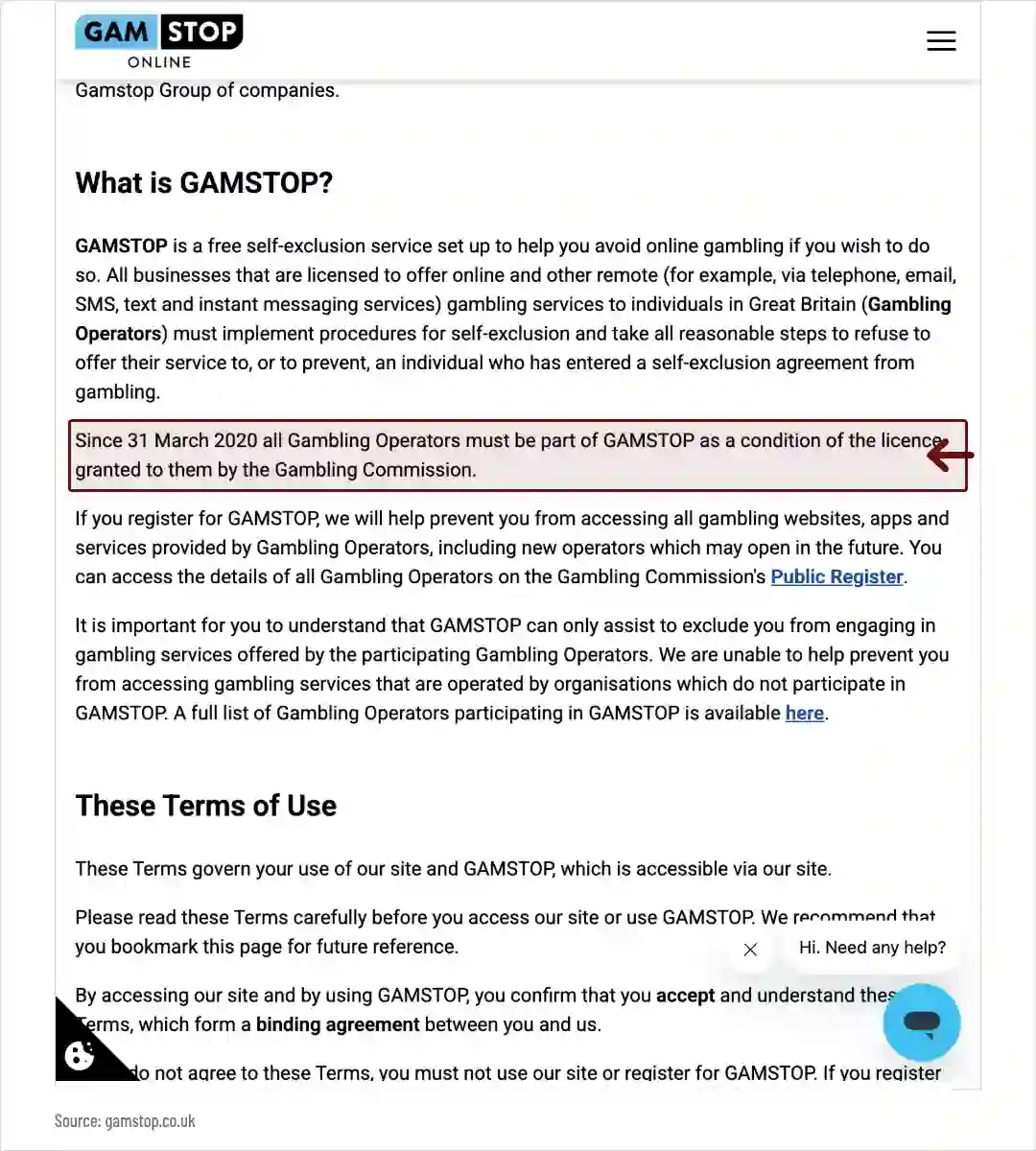
Screenshot of gamstop.co.uk; the box marks the quoted passage. Accessed 4 November 2026.
Player Profile
UK Licensed Bank Casino
Offshore Non-GAMSTOP Site
Main Banking Risk Offshore
Everyday casual player
Domestic Faster Payments clearing in pounds
International wire transfer in foreign currency
Currency conversion deductions on deposits and payouts
Speed-focused player
Real-time Pay.UK network settlement
Cross-border correspondent bank routing
Extended holding periods across intermediary banks
High-stakes player
Regulated consumer protection and ADR access
Unverified corporate IBAN accounts
Blocked payouts or unattainable withdrawal limits
Privacy-conscious player
Encrypted Open Banking API authorisation
Manual bank statement uploads to unverified hosts
Data protection failures, fraud, and identity theft
This comparison shows that every player profile loses statutory safeguards and incurs additional banking friction when moving from Faster Payments to an unlicensed non gamstop casino bank transfer.
Overseas gaming permits give UK residents zero local statutory protection
Foreign gambling licences provide British residents with zero domestic legal protection because the Gambling Commission states that permits issued abroad do not authorise operations in Great Britain. Players should verify the official register before funding any account, as unlicensed websites lack secure payment systems and leave customers without legal recourse when a bank transfer casino non uk withholds balances.
High-stakes players face manual IBAN routing on offshore wire transfers
High-stakes players face manual IBAN and BIC routing on offshore wire transfers because unlicensed operators cannot access the domestic Pay.UK Faster Payment System. While an instant bank transfer casino uk supports individual Faster Payments of up to one million pounds through automated sort code clearing, offshore cashiers require manual cross-border payment instructions.
Entering international beneficiary details by hand removes automated payee name verification and places the full liability for misdirected wire transfers on the account holder. Furthermore, the Gambling Commission warns that some illegal websites set withdrawal limits so high they become unattainable for high-volume depositors.
Everyday banking algorithms flag outbound bank transfers to non-UK merchants
Everyday banking algorithms flag outbound bank transfers to non-UK gambling merchants when payment providers apply fraud screening to unverified foreign accounts. Pay.UK rules allow individual banks offering the Faster Payments service to establish their own transaction limits and block suspicious cross-border wires. If a blocked wire starts to feel like the only brake on gambling spend, the National Gambling Helpline (run by GamCare) can be called free and in confidence on 0808 8020 133, 24 hours a day, 7 days a week.
British retail banks also enforce the Gambling Commission credit card prohibition, meaning players cannot fund gambling transfers through credit facilities under any circumstances.
Compliance filters inspect unverified international gambling beneficiary codes
Automated bank security systems screen international payment messages to block unlawful transfers to operators lacking a Gambling Commission licence. When an offshore cashier changes its recipient company name or corporate IBAN to disguise gambling activity, domestic banking compliance teams freeze the transfer and require the customer to explain the payment purpose.
Budget-conscious players lose value on non gamstop bank transfer exchange spreads
Budget-conscious players lose deposit value on non gamstop bank transfer exchange spreads because offshore cashiers rarely maintain pound sterling clearing accounts. Under Gambling Commission rules, customer gambling winnings in Great Britain carry 0 tax because duty is levied on operators' Gross Gambling Yield, whereas unlicensed international wires erode bankrolls through double currency conversion and intermediary handling charges.
Outbound bank wires convert pound sterling balances into foreign cashier currencies.
Correspondent banking networks deduct processing charges from international wire transfers.
Returning payouts undergo a second currency conversion back into pound sterling.
Unregulated cashier terms allow operators to apply administrative withdrawal deductions.
Impatient players wait days for offshore wire transfer cashouts to clear
Impatient players wait several business days for offshore wire transfer cashouts because cross-border banking networks do not use real-time domestic settlement. By contrast, a regulated fast bank transfer casino uses the Faster Payment System, which has operated since 2008 and processes real-time payments 365 days per year.
Unlicensed operators outside Great Britain rely on manual treasury sign-offs and international correspondent banks that pause processing over weekends and bank holidays. In addition, the Gambling Commission notes that illegal gambling websites frequently block payouts altogether once a player requests a bank withdrawal.
Privacy-focused players risk data exposure when sending bank transfers offshore
Privacy-focused players risk severe data exposure when sending bank transfers offshore because illegal gambling sites create serious identity theft and fraud hazards. Choosing safest bank transfer casinos within the British licensing framework protects financial credentials through regulated Open Banking gateways rather than manual file uploads.
Unregulated cashiers lack mandatory national financial data safeguards
Offshore payment desks operate without British data protection oversight and demand unredacted bank statements, sort codes, and passport copies before reviewing payouts. Handing full account numbers and home addresses to an entity operating outside the Gambling Act 2005 exposes the sender to unauthorised payment attempts and third-party data harvesting.
Dispute-wary players cannot use independent adjudication for offshore wire transfers
Dispute-wary players cannot use independent British adjudication for offshore wire transfers because Alternative Dispute Resolution (ADR) providers only cover Gambling Commission licensees. On a licensed platform, a customer must complain directly to the operator first and can refer unresolved financial disputes to a free, independent ADR provider after 8 weeks.
Although ADR providers do not accept customer service complaints, they adjudicate withheld balance disputes at licensed venues. When an unlicensed non gamstop bank transfer operator confiscates funds, the player has no access to UK ADR schemes, though consumers can confidentially report suspicious illegal gambling websites to the Gambling Commission via its dedicated reporting service.
Ex-credit card players pay bank transfer casinos straight from current accounts
Ex-credit card players pay bank transfer casinos straight from a current account, because the Gambling Commission states that gambling businesses must not accept credit card payments for gambling. A UK player's stake therefore comes from money already held in the account, and a bank transfer moves it without a card in between. Each transfer also leaves a line on the bank statement with the payee and reference, which makes the spend easy to review afterwards.
At non gamstop bank transfer casinos the switch changes more than the payment button:
Funding source: the deposit leaves a current account balance, not a credit line.
Routing: an IBAN and BIC for an overseas account are entered by hand instead of a domestic payment.
Cost: converting into the casino's currency adds an exchange spread on the deposit and again on the cashout.
Timing: the cashout clears through cross-border banking networks rather than real-time domestic settlement, so a withdrawal waits several business days.
Questions we get most often
Does an overseas gambling permit allow a non-GAMSTOP casino to serve players in Great Britain?
No, a gambling licence issued outside Great Britain does not permit an operator to provide gambling facilities to British consumers. Under Section 33 of the Gambling Act 2005, serving players in Great Britain without a Gambling Commission operating licence is illegal regardless of where the operator is based.
What is the reason casinos outside GAMSTOP want an IBAN plus BIC rather than my UK sort code?
Unlicensed casinos request IBAN and BIC codes because they cannot access the domestic Pay.UK Faster Payment System used by British banks. Consequently, all deposits and withdrawals must travel as manual cross-border wire transfers through international correspondent banks.
What fees do British banks typically apply when I wire money abroad to an offshore casino?
International wire costs depend on your bank's tariff and foreign exchange spread because offshore cashiers process payments in foreign currencies rather than pound sterling. While domestic gambling winnings carry 0 tax under Gambling Commission rules, cross-border transfers lose value to currency conversion and intermediary banking deductions.
Does a GAMSTOP self-exclusion lift automatically when the minimum period ends?
No, GAMSTOP never removes a self-exclusion automatically when a 6-month, one-year, or 5-year minimum period finishes. You must contact the GAMSTOP Contact Centre to request deactivation and wait through a mandatory minimum 24-hour cooling-off period.
Where can UK players confidentially report an unlicensed gambling website?
Players can report suspected unlawful gambling websites directly to the Gambling Commission using its confidential online reporting service. This reporting tool is designed to flag illegal operators rather than to mediate individual customer payout complaints.
18+
Stay within your limits
Gambling should stay a small, affordable pastime. Set limits on your deposits and your time before you play. If it is causing you harm, sign up to your national self-exclusion register and find free help at www.gamcare.org.uk.